


Navigating the luxury bedding market is an exercise in deciphering aggressive marketing jargon. When consumers walk into a high-end department store or browse premium online catalogs, they are bombarded with conflicting labels. The most pervasive point of confusion is the debate over 100% cotton or Egyptian cotton. From our experience in luxury textile manufacturing at Souverhome, this comparison fundamentally misleads buyers because it compares a purity metric against a geographical species.

To establish commercial and practical judgment, you must strip away the branding and look at the botanical reality of the fibers. The textile industry relies heavily on consumer ignorance regarding staple length, thread count inflation, and supply chain authenticity. In this uncompromising guide, we will break down the exact structural differences between standard cotton and Egyptian cotton, dissect the rampant counterfeiting in the industry, and explain exactly which material you should purchase to achieve superior sleep architecture.
Quick Answer: The Bottom Line
If you are asking whether you should buy 100% cotton or Egyptian cotton, the technical answer is that authentic Egyptian cotton is vastly superior to generic 100% cotton. Standard 100% cotton (Upland cotton) utilizes short-staple fibers that are rougher and prone to rapid pilling. Egyptian cotton is an Extra-Long Staple (ELS) fiber, resulting in butter-smooth, highly durable, and ultra-breathable sheets. However, because over 80% of "Egyptian cotton" on the retail market is legally counterfeit, we recommend purchasing certified 100% organic long-staple cotton as the most reliable, high-performance alternative.
Table of Contents
- What It Is: Decoding the Cotton Labels
- How It Works: Staple Length is Everything
- The Benefits: Why Staple Length Matters
- Limitations: The Dark Side of the Cotton Industry
- Who Should Use It vs. Who Does Not Need It
- Common Mistakes Buyers Make
- Buying Considerations: How to Spot a Fake
- Expert Recommendation from Souverhome
- Data and Comparison Tables
- Frequently Asked Questions
What It Is: Decoding the Cotton Labels

To understand the 100% cotton or Egyptian cotton debate, we must look at the botany. When a label reads "100% Cotton," it simply means no polyester or synthetic fibers were blended into the weave. In the vast majority of cases, this refers to Gossypium hirsutum, commonly known as Upland cotton. Upland cotton accounts for roughly 90% of global cotton production. It is cheap to grow, easy to harvest by machine, and serves as the backbone of fast fashion and budget bedding.
Egyptian cotton, on the other hand, refers to Gossypium barbadense grown specifically in the Nile River Valley. The unique climate of Egypt—high heat, consistent humidity, and nutrient-rich soil—allows this specific plant to produce Extra-Long Staple (ELS) fibers. True Egyptian cotton is hand-picked to ensure the delicate fibers are not stressed or snapped by heavy machinery. If you are comparing organic cotton vs bamboo vs tencel, authentic Egyptian cotton sits at the very apex of natural fiber performance.
How It Works: Staple Length is Everything
The entire luxury textile industry revolves around one metric: staple length. The "staple" is the individual fiber of the cotton boll. Standard 100% Upland cotton has a staple length of about 1 to 1.125 inches. When these short fibers are spun into yarn, there are thousands of tiny ends poking out of the thread. These exposed ends create a rough texture and, over time, break off or tangle into tiny balls of fuzz. If you have ever had to search for ways to prevent pilling on bamboo sheets or cheap cotton, short staples are the culprit.
Egyptian cotton has an Extra-Long Staple length exceeding 1.375 inches, sometimes reaching up to 2 inches. When ELS fibers are spun, the yarn is incredibly continuous. Fewer fiber ends mean the resulting thread is exponentially stronger, thinner, and smoother. This allows weavers to create highly dense, breathable fabrics without adding heavy, heat-trapping weight.
The Benefits: Why Staple Length Matters
In most professional situations, specifying ELS or Egyptian cotton yields immediate physical benefits that justify the premium price tag.
- Unmatched Durability: Because the yarn is made of long, continuous fibers, it resists snapping under tension. Authentic Egyptian cotton sheets will last a decade with proper care, whereas standard 100% cotton often thins and tears within two years.
- Enhanced Softness Over Time: Short-staple cotton degrades and roughens with every wash. Egyptian cotton does the exact opposite; the long fibers relax and soften, making the sheets feel more luxurious five years down the line than they did on day one.
- Superior Thermoregulation: The fine threads woven from ELS cotton allow for a highly porous fabric structure. This facilitates maximum airflow and moisture-wicking. It is far superior to knit structures; as noted in our cotton jersey sheets guide, dense knits trap heat, whereas crisp ELS percale keeps hot sleepers cool.
Limitations: The Dark Side of the Cotton Industry
We must use commercial and practical judgment when discussing Egyptian cotton. Its biggest limitation is not a physical flaw, but a market reality: fraud. Due to its prestigious reputation, manufacturers globally label standard 100% cotton as "Egyptian-feel" or "Egyptian Quality." In severe cases, they outright lie.
Industry audits have revealed that up to 90% of products labeled "Egyptian Cotton" in major big-box retailers contain exactly zero DNA from the Gossypium barbadense plant grown in Egypt. You are paying a massive markup for standard Upland cotton. This is why many procurement experts and discerning consumers now bypass the Egyptian label entirely, pivoting toward the best organic cotton sheets USA has to offer, provided they explicitly state "long-staple."
Who Should Use It vs. Who Does Not Need It
For commercial users: Boutique hotel operators, luxury interior designers, and high-end rental properties absolutely must invest in ELS or verified Egyptian cotton. The extended lifespan of the fabric dramatically lowers replacement overhead, and the tactile quality guarantees superior guest satisfaction.
For beginners and budget shoppers: Who does not need it? If you are outfitting a college dorm room, a temporary guest bed, or shopping for a toddler, investing $300+ in authentic Egyptian cotton is a poor allocation of capital. A high-quality, standard 100% cotton percale is perfectly adequate for low-stakes environments.
For medical/dermatological needs: If you suffer from skin conditions, the smoothness of the fiber is critical to prevent micro-abrasions. While you might be researching the best pillowcases for psoriasis or the best pillowcases for acne, an ELS cotton sateen weave provides the frictionless environment your skin barrier requires to heal.
Common Mistakes Buyers Make
In our testing and industry observation, the most catastrophic mistake buyers make is falling for the Thread Count Fallacy. Consumers have been brainwashed into believing that a 1000-thread-count sheet is inherently better than a 300-thread-count sheet.
This is a marketing gimmick. A loom can only fit so many threads into a square inch (usually peaking around 400 to 500 for single-ply yarn). To achieve a 1000 thread count, cheap manufacturers take low-quality, short-staple 100% cotton, twist four weak threads together (multi-ply), and jam them into the loom. The result is a heavy, unbreathable, rough sheet that traps heat and pills immediately. We see this confusion constantly when clients ask us to break down the Boll and Branch vs Parachute sheets debate. A genuine 300-thread-count Egyptian or long-staple organic cotton sheet will profoundly outperform a fake 1000-thread-count sheet.
Buying Considerations: How to Spot a Fake
If you are determined to purchase authentic Egyptian cotton, you must act as an auditor. Look for the trademarked logo of the Cotton Egypt Association (CEA). This organization conducts strict DNA testing on textiles to verify their origin. If the packaging lacks this certification, leave it on the shelf.
Alternatively, focus on structural terminology rather than geographical marketing. Look for keywords like "Single-Ply Yarn," "Extra-Long Staple (ELS)," and "GOTS Certified Organic." By focusing on how the thread is constructed rather than where it was grown, you bypass the counterfeit market entirely. This exact methodology applies whether you are buying sheets, evaluating tencel vs modal comparison fabrics, or consulting a luxury blanket brands guide.
Expert Recommendation from Souverhome
From our experience, playing Russian roulette with the counterfeit Egyptian cotton market is a losing game for consumers. We recommend bypassing the geographical debate entirely and prioritizing fiber structure and chemical purity. When deciding between 100% cotton or Egyptian cotton, the ultimate winner is 100% Organic Long-Staple Cotton.
At Souverhome, we bypass opaque supply chains to source premium long-staple organic cotton. By utilizing a single-ply sateen weave, we achieve the buttery smoothness and extreme durability historically associated with Egyptian cotton, without the risk of counterfeits or the heavy chemical processing inherent in standard 100% cotton production.
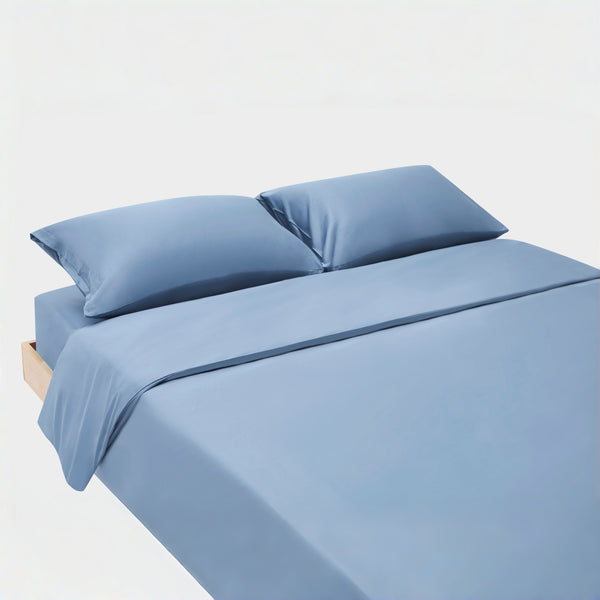
Organic Cotton Sheet Set
Engineered for the discerning sleeper, our signature sheet set relies entirely on Extra-Long Staple organic cotton to deliver a sleep experience that softens with every wash while resisting pilling and fiber degradation.
- 100% premium long-staple cotton for unmatched durability.
- Superb high-thread cotton sateen with a buttery smooth touch.
- Hypoallergenic and naturally grown cotton with zero harsh chemicals.
- Highly breathable construction to regulate body temperature.
- Eco-friendly and sustainably sourced.
Data and Comparison Tables
| Material Type | Staple Length | Durability & Feel | Market Counterfeit Risk |
|---|---|---|---|
| Standard 100% Cotton (Upland) | Short to Medium (1" - 1.125") | Moderate; prone to pilling and thinning. | Low (It is the baseline standard). |
| Authentic Egyptian Cotton | Extra-Long Staple (1.375" - 2") | Supreme; gets softer with age, highly durable. | Extreme (Up to 80-90% fake in big box retail). |
| 100% Organic Long-Staple Cotton | Long to Extra-Long | Supreme; zero toxic chemical degradation. | Low (If GOTS Certified). |
| Feature | Standard 100% Cotton | Authentic Egyptian Cotton |
|---|---|---|
| Breathability | Good, but thicker multi-ply yarns trap heat. | Exceptional. Fine threads allow maximum airflow. |
| Pilling Resistance | Poor. Short fibers break and tangle easily. | Excellent. Continuous long fibers resist friction. |
| Price Point | Budget to Mid-Tier ($40 - $100) | Luxury Tier ($200 - $600+) |
| Lifespan | 1 to 3 Years | 7 to 10+ Years |
| Pros (Advantages) | Cons (Limitations) |
|---|---|
| Produces the strongest, finest yarn in the textile industry. | Exorbitant price point compared to standard cotton. |
| Fabric becomes noticeably softer after every wash cycle. | Massive risk of purchasing counterfeit, mislabeled products. |
| Highly porous structure makes it ideal for hot sleepers. | Requires gentle washing; harsh detergents degrade the ELS fibers. |
| Takes dye exceptionally well, resulting in vibrant, lasting colors. | Prone to wrinkling as it lacks toxic formaldehyde anti-wrinkle resins. |
| Specification | What You Want | What You Should Avoid |
|---|---|---|
| Staple Length | "Extra-Long Staple", "ELS", or "Long-Staple" | Labels that omit staple length entirely (implies short staple). |
| Thread Count | 200 to 500 (Single-Ply Yarn) | 800 to 1500+ (Indicates cheap, heavy multi-ply yarn). |
| Certifications | GOTS Certified Organic, Cotton Egypt Association DNA Seal | "Egyptian-Feel", "Egyptian Quality", "Microfiber Blend". |
Frequently Asked Questions
Which is better, 100% cotton or Egyptian cotton?
Authentic Egyptian cotton is generally superior to standard 100% cotton because it utilizes an extra-long staple (ELS) fiber. ELS fibers create stronger, smoother, and more durable threads that resist pilling. However, 100% organic long-staple cotton is often the best commercial choice due to the incredibly high rates of counterfeit Egyptian cotton currently flooding the retail market.
Is Egyptian cotton always 100% cotton?
Yes, true Egyptian cotton is 100% cotton. The term "Egyptian" refers to the specific botanical species (Gossypium barbadense) and the geographical region where it is grown along the Nile River. It is not a synthetic blend. If a label says "Egyptian Cotton Blend," it is a cost-cutting measure utilizing inferior fibers.
How can you tell if Egyptian cotton is real?
To verify authenticity, look for the Cotton Egypt Association's trademark logo on the packaging. This governing body conducts DNA testing to ensure the fibers originated in Egypt. Without this strict certification, there is a high probability the product is standard short-staple Upland cotton falsely marketed to justify a luxury markup.
Authoritative References & Industry Standards
To ensure our sourcing guidance is rooted in objective agricultural and textile science, we rely on data from the following authorities:
- Cotton Egypt Association - The official regulatory and promotional body that protects the legacy of Egyptian Cotton through DNA-based authentication protocols to combat global supply chain fraud.
- U.S. Department of Agriculture (USDA) - Cotton & Wool - Federal agency providing comprehensive data on global cotton species, staple length categorizations (Upland vs. ELS), and agricultural market trends.
- The New York Times (Wirecutter) Textile Testing - Independent consumer testing organization establishing rigorous methodologies for evaluating thread count validity, staple length durability, and weave performance in residential bedding.

Dejar un comentario
Este sitio está protegido por hCaptcha y se aplican la Política de privacidad de hCaptcha y los Términos del servicio.