


Packing for a cross-country expedition, an international flight, or even a rigorous weekend camping trip forces you to confront the ultimate luggage liability: the traditional cotton bath towel. A standard terry cloth towel is a massive logistical failure for the modern traveler. It is excessively bulky, inherently heavy, and once saturated, it becomes a damp, malodorous breeding ground for bacteria that will cross-contaminate everything in your duffel bag. Consequently, travelers continually arrive at the same essential procurement question: is a microfiber towel good for travel?

From our experience engineering and rigorously testing textile performance at Souverhome, substituting cotton for synthetics is not merely a preference; it is a mandatory upgrade for anyone prioritizing payload efficiency and hygiene. However, the market is aggressively saturated with inferior, low-GSM (Grams per Square Meter) fabrics that feel like abrasive plastic and repel water rather than absorbing it. If you want to stop wasting capital on gear that fails in the field, you must evaluate the structural mechanics of these textiles. In this uncompromising guide, we will dissect the engineering behind microfiber, compare it directly to legacy alternatives, and provide practical judgment on exactly what specifies a premium travel companion.
Quick Answer: Is a Microfiber Towel Good for Travel?
Yes. To directly answer whether a microfiber towel good for travel is a factual statement: it is the undisputed industry standard. In most professional situations, a premium microfiber towel is the only acceptable option for mobile applications because it packs down to a fraction of the size of cotton, holds up to seven times its weight in water, and dries up to five times faster. This rapid evaporation prevents the buildup of mold, mildew, and odor inside enclosed luggage. We recommend prioritizing a high-density blend (typically 80% polyester and 20% polyamide) with antimicrobial properties to ensure maximum absorption and longevity on the road.
Table of Contents
- What It Is: The Science of Synthetic Textiles
- How It Works: Capillary Action Explained
- Quick Summary Table: Travel Towel Metrics
- The Irrefutable Benefits for Travelers
- Limitations and the Sensory Adjustment
- Comparison Table: Microfiber vs. Cotton vs. Linen
- Who Should Use It & Who Does Not Need It
- Common Mistakes That Destroy Microfiber
- Crucial Buying Considerations
- Pros and Cons Table
- Expert Recommendation from Souverhome
- Frequently Asked Questions (FAQ)
What It Is: The Science of Synthetic Textiles
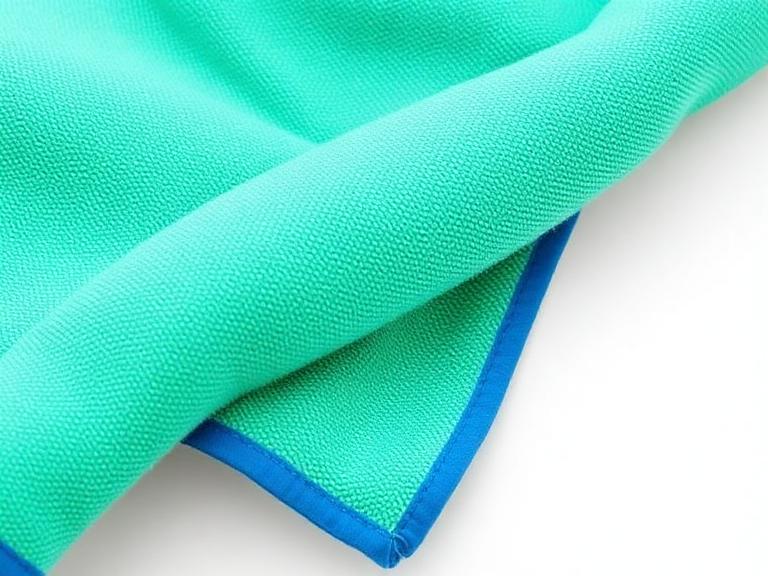
Before making a buying decision, you must understand what you are actually purchasing. Microfiber is a highly engineered synthetic fabric, typically composed of a strict ratio of polyester and polyamide (nylon). To legally classify as "microfiber," the individual strands of the material must be finer than one denier. In premium manufacturing, these fibers are significantly smaller—often 1/100th the diameter of a human hair.
The polyester provides the towel with its structural durability and shape retention, while the polyamide is the active ingredient responsible for water absorption and the plush, soft hand-feel. When evaluating the 5 Main Types of Fast-Drying Towels, you will discover that it is the precise splitting of these microscopic fibers during the manufacturing process that dictates the towel's ultimate performance in the field.
How It Works: Capillary Action Explained

Traditional cotton works through basic absorption; the core of the cotton fiber swells with water like a sponge. This is why a wet cotton towel takes hours (or days) to dry—the moisture is trapped deep inside the organic core.
Microfiber operates on a completely different mechanical principle known as capillary action. During the splitting process, millions of microscopic crevices are created along the length of the synthetic fiber. When the towel makes contact with water, it does not absorb the moisture into the core; instead, it rapidly draws the water up and traps it within these millions of external crevices. Because the water remains close to the surface and the synthetic fibers themselves are hydrophobic (water-repelling), the moisture evaporates back into the air with astonishing speed. This mechanism is exactly why we emphasize them in our review of the 10 Best Quick-Dry Bath Towels for Travel & Camping in 2026.
| Performance Metric | Premium Microfiber | Standard Cotton |
|---|---|---|
| Drying Speed | 20 - 45 Minutes (Air Dry) | 4 - 8 Hours (Air Dry) |
| Packed Volume | Ultra-Compact (Fits in a shoe) | Massive (Consumes half a carry-on) |
| Absorbency Limit | 7x its own weight | 3x to 4x its own weight |
| Antimicrobial Resistance | High (Resists mildew/odor) | Low (Highly prone to sour smells) |
The Irrefutable Benefits for Travelers
In our testing, the transition from legacy fabrics to engineered microfiber solves three critical pain points for modern travelers: space, weight, and hygiene.
- Drastic Volume Reduction: A full-sized microfiber bath towel rolls down to the size of a water bottle. If you are flying budget airlines with strict cabin baggage dimensions, eliminating the bulk of a cotton towel allows you to pack extra clothing or camera gear.
- Elimination of Damp Odors: Packing a damp cotton towel into an unventilated backpack guarantees a sour, mildewed smell that will permeate your wardrobe. Because microfiber dries in a fraction of the time, you can shower in the morning, hang it on your hostel bed, and pack it bone-dry before your checkout time. This specific hygienic advantage makes it a top recommendation in our guide to the 13 Best Quick-Dry Bathroom Towels in 2026.
- Sand and Debris Rejection: Unlike the looped terry weave of cotton that acts like a net for sand, twigs, and gym floor dirt, a high-density, suede-finish microfiber towel releases debris with a single firm shake. This makes it an uncompromising asset for beach excursions or rugged backcountry camping.
Limitations and the Sensory Adjustment
We must use commercial and practical judgment: microfiber is not flawless. The primary limitation is the sensory experience. You cannot step out of the shower and aggressively rub a microfiber towel back and forth across your skin as you would with cotton. The millions of split fibers create extreme microscopic friction. Instead of sliding, it will "catch" or cling to the skin. To use it correctly, you must employ a "pat-dry" technique—simply laying the fabric against your skin and letting the capillary action pull the water away.
| Material Type | Best Travel Application | Major Advantage | Major Disadvantage |
|---|---|---|---|
| Premium Microfiber | Backpacking, Gym, Hostels, Camping | Unmatched drying speed and minimal pack size. | Requires a pat-dry motion; lacks the plush hotel feel. |
| Standard Cotton | Stationary Hotel Stays, Car Camping | Familiar, plush sensory experience on the skin. | Heavy, holds odors, and consumes massive luggage space. |
| Turkish Linen (Peshtemal) | Beach lounging, Warm climate resorts | Aesthetically pleasing, doubles as a scarf/wrap. | Thin material saturates quickly and offers poor cold-weather insulation. |
Who Should Use It & Who Does Not Need It
For commercial users and heavy-duty applications: Digital nomads, international backpackers, frequent gym-goers, and college students sharing damp communal dorm bathrooms absolutely require microfiber technology. It is a logistical necessity for anyone constantly on the move. For specific demographic insights, review the 5 Best Quick-Dry Towels for College Students in 2026.
Who does not need it: If your travel exclusively consists of checking into five-star resorts where fresh linens are provided daily, or if you are outfitting a luxury guest bathroom at home, you do not need a microfiber travel towel. For stationary luxury, stick to high-GSM Egyptian or Turkish cotton.
Common Mistakes That Destroy Microfiber
The most devastating mistake consumers make is ruining the fabric's engineering in the laundry room. Never wash microfiber with fabric softener or dryer sheets. Fabric softeners contain oils and waxes designed to coat fibers. When applied to microfiber, these waxes instantly clog the millions of microscopic crevices that give the towel its capillary action, rendering it completely useless and water-repellent.
Additionally, for beginners, subjecting microfiber to high heat in a tumble dryer will literally melt the synthetic polyester tips, destroying the soft hand-feel and fusing the fibers together. Always wash in cold or warm water and either air dry or tumble dry on the lowest possible heat setting.
Crucial Buying Considerations
| Consideration | What to Demand | Why It Matters |
|---|---|---|
| Polyamide Ratio | Look for a 20% to 30% Polyamide blend. | A towel that is 100% polyester will feel like cheap plastic and refuse to absorb water. The polyamide provides the necessary absorption and softness. |
| Edge Construction | Overlocked or reinforced stitching. | Cheaply cut microfiber will fray and shed microplastics aggressively. Superior edge security ensures the towel survives rigorous commercial laundering. |
| Included Hardware | Elastic snap loops or integrated carabiner clips. | When traveling, you need the ability to hang the towel on tree branches, bunk bed frames, or outside your backpack to dry on the move. |
| Pros of Microfiber | Cons of Microfiber |
|---|---|
| Packs down to 15% the volume of a standard cotton towel. | Clingy texture requires patting dry rather than rubbing. |
| Air dries in minutes, preventing mildew and bacterial odor. | Susceptible to melting if exposed to high dryer heat or campfires. |
| Absorbs up to 7 times its weight in water instantly. | Requires specific laundry protocols (No fabric softeners). |
| Sheds sand and dirt easily with a single shake. | Sheds microplastics into wastewater over time. |
Expert Recommendation from Souverhome
In most professional situations, settling for a generic, unbranded travel towel results in a rigid, non-absorbent piece of fabric that fails when you need it most. We recommend investing in verified, high-GSM density blends that prioritize skin feel and structural longevity alongside rapid evaporation.
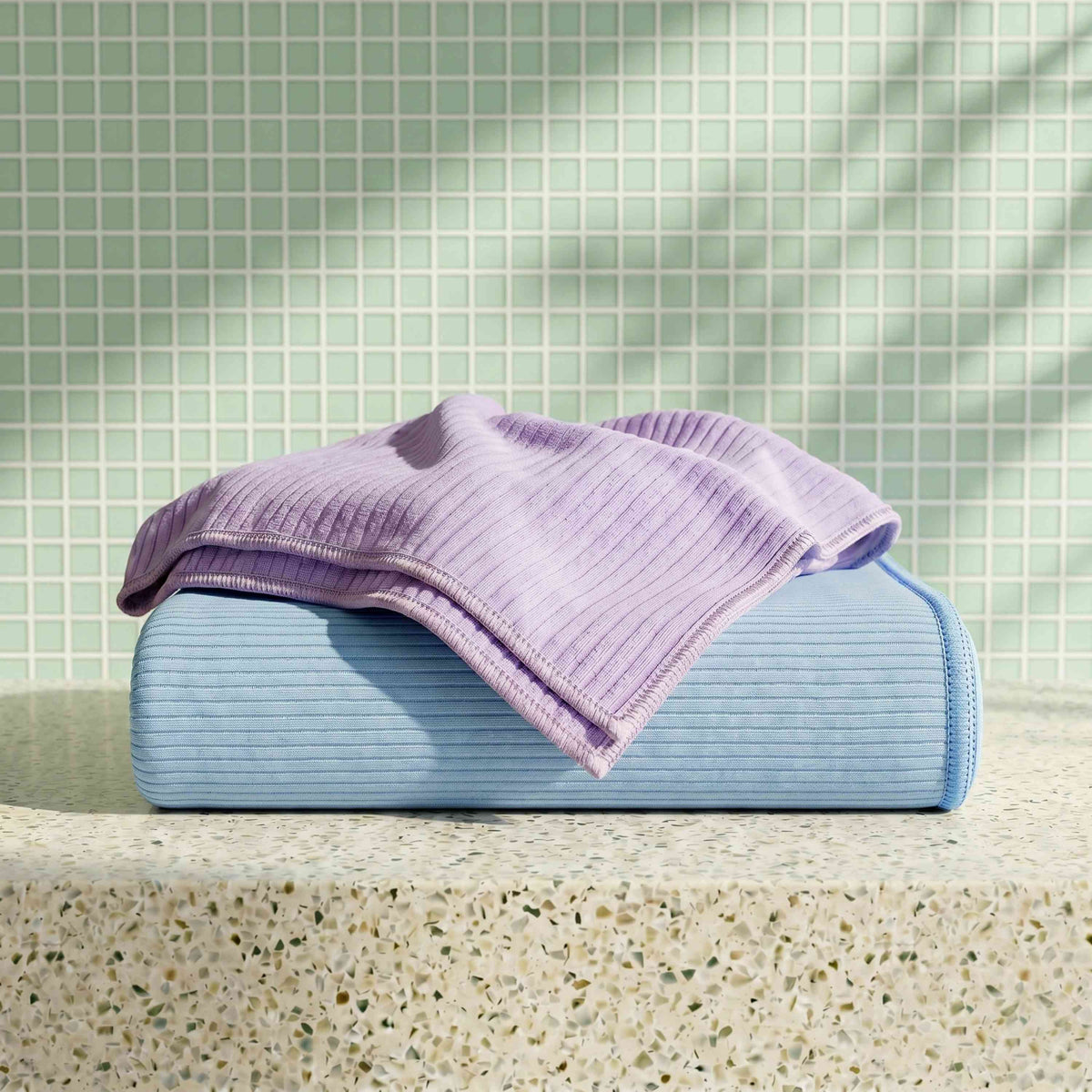
Quick Dry Towel Premium Set
Designed strictly for the uncompromising traveler, this setup eliminates the damp towel nightmare permanently.
- Material: Premium High-Density Microfiber (Skin Friendly & Ultra Soft)
- Size Options: L Bath Towel (31.5in x 51in) + M Hand Towel (31.5in x 23.5in)
- Weight: Ultra-lightweight Premium Set at just 300g
- Properties: Antibacterial Fresh, Quick Dry, Extremely Durable
- Innovative Designs: Superior Edge Security, Functional Elastic Strap for hanging, and a Portable Storage Bag included.
Whether you are evaluating the 10 Best Quick-Dry Towels for Travel in 2026 or upgrading your daily gym kit, this premium set delivers the exact capillary performance required to keep your luggage dry and your hygiene uncompromising.
Frequently Asked Questions (FAQ)
Because premium microfiber evaporates moisture exponentially faster than cotton, it inherently denies bacteria the damp, dark environment they need to multiply. This makes the fabric highly resistant to sour odors. In standard travel scenarios, you can safely use a microfiber towel 4 to 5 times before running it through a laundry cycle. Naturally, if you use it to wipe off mud or salt water, it requires immediate washing.
Yes. In fact, standard cotton bath towels are notoriously damaging to wet hair. The abrasive terry loops rough up the hair cuticle, causing severe frizz and breakage. Microfiber, conversely, causes minimal friction. Furthermore, its rapid capillary action violently pulls water out of the hair shaft, drastically reducing the time required for damaging blow-dryers. We highly recommend reviewing our guide on 8 Fast-Drying Hair Towels for Curly Hair for specific hair-care protocols.
This is a feature, not a bug. The engineering of microfiber involves splitting the synthetic threads to create millions of microscopic hooks. These hooks are designed to forcefully grab moisture, dirt, and oil. When you attempt to rub the towel vigorously across your body, those millions of hooks are gripping your skin, creating a sensation of high friction or "stickiness." The correct usage protocol is to wrap the towel around yourself or firmly pat it against the skin, allowing the fabric to pull the water away without rubbing.
Authoritative References & Industry Standards
To ensure our fabric science and travel hygiene recommendations remain empirically accurate, we align our data with the following authoritative bodies:
- Textile Exchange: Global non-profit providing rigorous data on synthetic fiber production, recycled polyester standards, and the environmental impact of polyamide manufacturing. Review Textile Exchange Data
- ASTM International: Recognized authority establishing the standard test methods for evaluating the water absorbency, capillary action, and tensile strength of synthetic textiles (e.g., ASTM D4772). Explore ASTM Textile Standards
- Centers for Disease Control and Prevention (CDC): Providing public health guidelines on the prevention of dermatological fungal infections and the hygiene protocols required for communal travel environments. Access CDC Personal Hygiene Guidelines

留言
此網站已受到 hCaptcha 保護,且適用 hCaptcha 隱私政策以及服務條款。