


Dealing with damp, musty textiles is a universal frustration that extends far beyond mere annoyance; it is a fundamental hygiene issue. When a towel remains damp for extended periods, it becomes a breeding ground for mildew, bacteria, and microbial waste—which is exactly what causes that sour "wet dog" odor. From our experience at SouverHome engineering advanced textile solutions, generic thick cotton towels are inherently flawed for modern, fast-paced lifestyles. They absorb water effectively but refuse to release it efficiently.

If you want to end the cycle of stepping out of a clean shower only to dry off with a sour-smelling piece of fabric, you must intervene in the drying process. You are reading this because you need practical, actionable advice to make towels dry faster, whether you are dealing with a humid residential bathroom, packing for a camping trip, or managing a commercial gym facility. In this guide, we provide a commercial and practical judgment on textile care, explaining not only what methods work but whether it is actually worth upgrading your entire linen closet to solve the problem.
Quick Answer: How to Make Towels Dry Faster
To immediately make towels dry faster, you must optimize airflow, reduce ambient humidity, and maximize fabric surface area. Here are the core professional tactics:
- Maximize Surface Area: Hang towels flat across wide bars rather than bunching them on single wall hooks.
- Eliminate Fabric Softeners: Chemical softeners coat fibers in silicone, trapping moisture inside and drastically increasing drying times.
- Optimize Airflow: Utilize bathroom exhaust fans during and for 30 minutes after showers to extract humid air.
- Leverage Strategic Heat: Use heated towel racks or machine dryer balls to aggressively expel moisture.
- Utilize High-Spin Washing: Set your washing machine to the maximum extraction spin cycle before drying.
- Upgrade to Microfiber: Replace heavy cotton with advanced microfiber blends engineered specifically for rapid evaporation.
Table of Contents
- What It Is: The Physics of Drying Towels
- How It Works: Evaporation Mechanics
- The 6 Proven Tips to Make Towels Dry Faster
- Benefits of Fast-Drying Textiles
- Limitations of Standard Methods
- Who Should Use These Techniques (And Who Does Not Need To)
- Common Mistakes in Towel Maintenance
- Buying Considerations
- Expert Recommendation: The SouverHome Solution
- Pros & Cons and Comparison Tables
- Frequently Asked Questions (FAQ)
- References
What It Is: The Physics of Drying Towels
Drying a towel is a straightforward exercise in thermodynamics and fluid dynamics. To make towels dry faster, you must facilitate the transition of water from a liquid state trapped within the fabric's fibers into a gaseous state (water vapor) dispersed into the surrounding air. This process relies on three primary variables: thermal energy (heat), surface area exposure, and the relative humidity of the surrounding environment.
How It Works: Evaporation Mechanics
In most professional situations involving textile care, we evaluate the Grams per Square Meter (GSM) of the fabric. Traditional luxury bath towels often feature a GSM of 600 to 900. While this makes them feel plush, it creates an incredibly dense matrix of cotton loops. Water is drawn deep into these hydrophilic (water-loving) loops via capillary action. If the ambient air in your bathroom is already saturated with moisture from your shower, the air cannot accept the water vapor emitting from the towel. The evaporation process stalls, and the towel stays wet for hours, creating the perfect microbiological environment for bacteria.
The 6 Proven Tips to Make Towels Dry Faster
1. Maximize Surface Area and Hanging Architecture

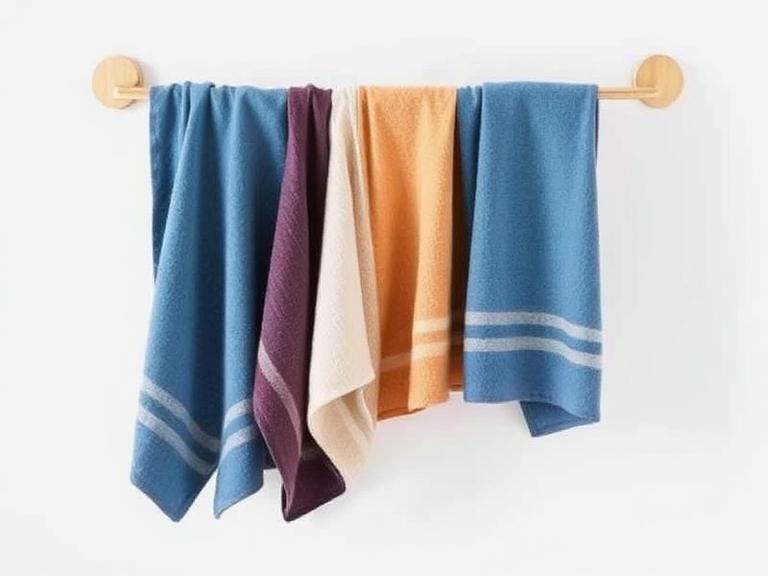
We recommend entirely abandoning wall hooks. When you hang a towel on a single hook, the fabric folds in on itself, trapping moisture in the dark, unventilated core of the bunch. Instead, drape towels flat across a wide towel bar. If you must use hooks due to space constraints, ensure you spread the towel across two hooks to keep the fabric as open as possible.
2. Eliminate Fabric Softeners and Dryer Sheets
This is a critical error made by millions of households. Fabric softeners and dryer sheets operate by coating textile fibers in a thin layer of synthetic silicone or animal-fat-derived lubricants to make them feel artificially soft. In our testing, this chemical barrier drastically impedes the fabric's ability to release water vapor. Strip these chemicals from your routine. To clear existing buildup, run your towels through a wash cycle with one cup of white vinegar and zero detergent.
3. Optimize Bathroom Airflow and Extraction
You cannot make towels dry faster in a room that feels like a steam room. Bathroom exhaust fans must be utilized not just during the shower, but for at least 30 to 45 minutes afterward. If you lack an exhaust fan, leave the bathroom door open and utilize a portable oscillating fan to force the humid air out of the space. Moving air strips away the boundary layer of saturated air resting directly against the damp towel.
4. Leverage Strategic Heat (Radiators and Racks)
Heat accelerates molecular movement, drastically increasing evaporation rates. Installing a heated towel rack is a premium but highly effective solution for residential bathrooms. For those utilizing machine dryers, adding three to four wool dryer balls to the drum physically separates the heavy, wet towels as they tumble, allowing hot air to circulate through the load rather than hitting a dense, wet clump.
5. Utilize High-Spin Washing Extraction
The drying process begins in the washing machine. For beginners managing their laundry appliances, always set the final spin cycle to the highest possible speed (often 1200 to 1400 RPM). Mechanical centrifugal force is vastly more energy-efficient at removing water than thermal evaporation in a tumble dryer. The drier the towel comes out of the washer, the faster it finishes drying.
6. Upgrade Your Fabric Technology
If you are consistently struggling with damp towels, you are likely fighting a losing battle against heavy cotton. The ultimate solution to make towels dry faster is to switch materials. Advanced microfiber blends are engineered with split-fiber technology that increases the microscopic surface area exponentially. This allows them to absorb massive amounts of water but release it into the air rapidly. If you are looking to end the damp towel nightmare entirely, a material upgrade is required.
Benefits of Fast-Drying Textiles
The benefits of implementing these strategies are multifaceted. From a hygiene perspective, fast-drying towels stop the proliferation of staphylococcus and mildew, preventing skin irritation and body acne. From an economic standpoint, reducing the time your towels spend in an electric tumble dryer significantly lowers household energy consumption. Finally, fast-drying fabrics are inherently lighter, making them ideal for mobile applications.
Limitations of Standard Methods
While maximizing airflow and using vinegar are effective, they cannot overcome the physical limitations of an ultra-heavy 900 GSM Turkish cotton towel in a poorly ventilated, humid climate. If you live in a tropical environment, standard cotton will always struggle. This is why commercial gyms and travel enthusiasts abandon cotton entirely.
Who Should Use These Techniques (And Who Does Not Need To)
For commercial users: Gym owners, spa managers, and boutique hoteliers must strictly enforce the elimination of fabric softeners and transition to high-spin commercial extractors to lower operational laundry costs. Many are already transitioning to advanced synthetic blends, similar to the 8 Best Quick-Dry Bath Towels for Gym in 2026.
For heavy-duty applications: Campers, hikers, and backpackers cannot rely on ambient air drying for heavy cotton. They require purpose-built microfiber gear, which we cover extensively in our guide to the 10 Best Quick-Dry Bath Towels for Travel & Camping.
Who does not need it: Individuals living in ultra-arid, desert climates (like Arizona or Nevada) with highly effective HVAC systems often find that even heavy cotton towels dry adequately due to the aggressively low ambient humidity.
Common Mistakes in Towel Maintenance
Beyond using fabric softener, the most frequent error is overloading the tumble dryer. To make towels dry faster in a machine, the drum should never be more than half full. Towels need vertical drop space to open up; cramming them in ensures the center of the load remains a damp, tangled mess. Additionally, when dealing with hair, many people aggressively rub their scalp with heavy cotton, which damages the cuticle and takes forever to dry. We strongly advise reviewing the 5 Fastest Ways to Dry Hair with a Towel, and upgrading to specialized gear like the Fast-Drying Hair Towels for Curly Hair or Fastest-Drying Hair Towels for Fine Hair.
Buying Considerations
If you decide that managing heavy cotton is no longer worth your time, you need commercial and practical judgment when purchasing replacements. Look for:
- Material Composition: True microfiber (typically a blend of polyester and polyamide) offers the fastest evaporation rates.
- Density/Weave: Suede-like, dense flat weaves dry faster than shaggy, high-pile terry weaves.
- Antimicrobial Treatments: Premium quick-dry towels feature treatments that inhibit bacterial growth even if left in a gym bag.
Expert Recommendation: The SouverHome Solution
From our experience, the most definitive way to make towels dry faster is to stop buying textiles that are designed to hold onto water indefinitely. We engineered a superior solution specifically to combat the hygiene and logistical nightmares of traditional bath linens.
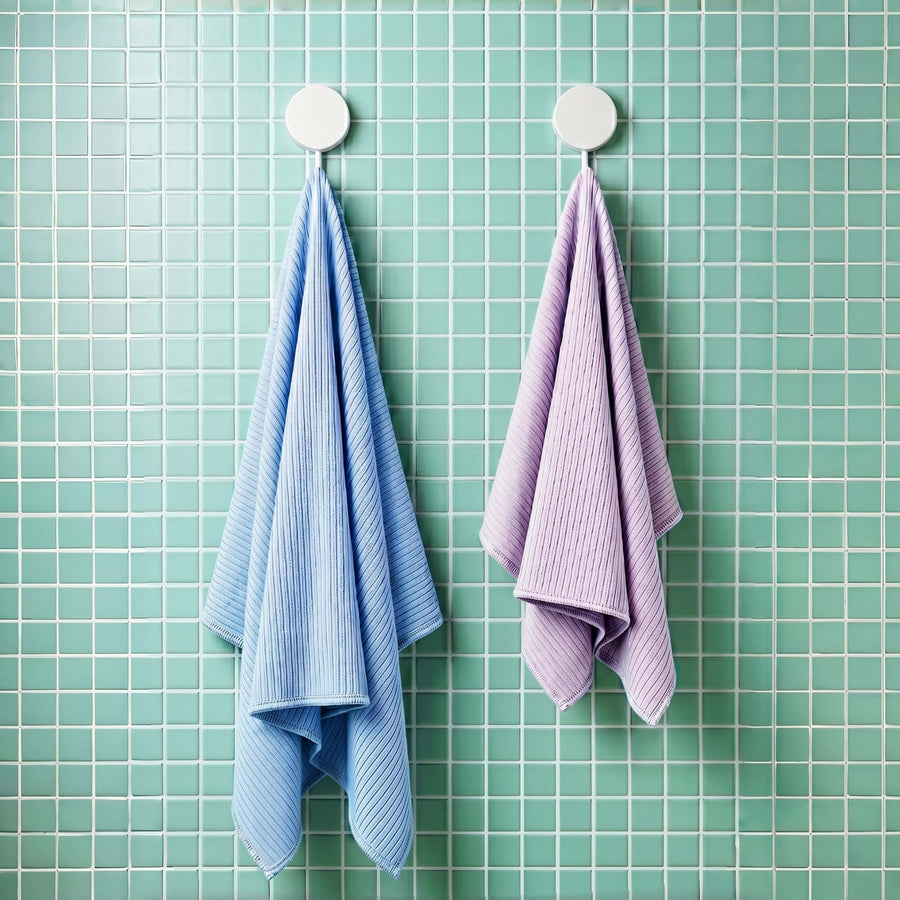
Quick Dry Towel Premium Set
We recommend the SouverHome Quick Dry Towel Premium Set for anyone serious about upgrading their daily routine. This set utilizes dense, split-fiber microfiber that forcefully wicks moisture away from the skin and evaporates it at a fraction of the time required by cotton.
- Material: Advanced Microfiber
- Size Options: L Bath Towel (31.5in x 51in / 80cm x 130cm) + M Hand Towel (31.5in x 23.5in / 80cm x 60cm)
- Weight: Ultra-lightweight Premium Set at 300g
- Color Options: L (Blue Sky) + M (Lilac)
- Properties: Dense Microfiber, Super Absorbent, Skin Friendly, Quick Dry, Antibacterial Fresh, Lightweight Portable, Extremely Durable, Ultra Soft
- Innovative Designs: Superior Edge Security, Functional Elastic Strap for rolling, and a Portable Storage Bag included.
In our testing, this specific material blend drastically outperforms standard bath linens, ensuring you never face a damp, musty towel again. It is hypoallergenic and engineered for high-frequency use.
Quick Summary & Comparison Tables
| Drying Method | Time to Dry | Energy Cost | Fabric Wear & Tear |
|---|---|---|---|
| Tumble Dryer (High Heat) | 45 - 60 mins | High | High (Breaks down fibers) |
| Heated Towel Rack | 2 - 4 hours | Low to Moderate | Minimal |
| Air Drying (Good Ventilation) | 6 - 12 hours | Zero | Zero |
| Microfiber Towel (Air Dry) | 1 - 3 hours | Zero | Zero |
| Material Type | Drying Speed | Absorbency | Odor Resistance | Best For |
|---|---|---|---|---|
| Standard Cotton (Terry) | Very Slow | High | Poor (Prone to mildew) | Guest bathrooms, luxury display |
| Bamboo Viscose | Moderate | Very High | Moderate | Sensitive skin, residential use |
| Microfiber (SouverHome) | Extremely Fast | Exceptional | Excellent (Antibacterial) | Daily showers, gym, travel, high-humidity areas |
| Pros | Cons |
|---|---|
| Dries up to 5x faster than traditional cotton. | Requires a different "patting" motion to dry skin rather than "rubbing". |
| Prevents the growth of musty odor-causing bacteria. | Cannot be washed with fabric softeners or high heat. |
| Packs down to a fraction of the size for travel and gym bags. | Lacks the heavy, bulky aesthetic of luxury hotel spa towels. |
| Drastically reduces laundry machine energy consumption. | High-quality dense microfiber represents a slightly higher initial investment. |
Frequently Asked Questions (FAQ)
Why do my towels take so long to dry even in the dryer?
If your towels take an excessive amount of time in the machine dryer, you likely have a clogged lint filter or a restricted exhaust vent line, which traps humid air inside the drum. Additionally, using fabric softener creates a waterproof silicone coating on the fibers, and overloading the drum prevents necessary hot air circulation.
Can I use a fan to make towels dry faster in the bathroom?
Yes. In most professional situations dealing with moisture control, moving air is critical. Pointing an oscillating fan directly at hanging towels breaks up the boundary layer of humid air surrounding the wet fabric, drastically accelerating the evaporation process, especially in windowless bathrooms.
Do quick-dry towels actually work?
Absolutely. Advanced microfiber quick-dry towels are engineered with synthetic split fibers that create massive microscopic surface area. This allows water to spread out thinly across the fabric matrix rather than pooling in thick cotton loops, resulting in evaporation rates that are significantly faster than traditional materials.
References
- U.S. Department of Energy (DOE) - Efficiency standards and guidelines for laundry appliances, extraction cycles, and energy-saving drying techniques.
- Centers for Disease Control and Prevention (CDC) - Guidelines on indoor moisture control, humidity, and preventing mold/mildew growth on household textiles.
- American Association of Textile Chemists and Colorists (AATCC) - Industry standards for testing textile absorbency, evaporation rates, and antimicrobial properties.

Leave a comment
This site is protected by hCaptcha and the hCaptcha Privacy Policy and Terms of Service apply.