


Fine hair is anatomically distinct and highly vulnerable. Because the diameter of a fine hair strand is significantly smaller than that of medium or coarse hair, it possesses a weaker structural cortex and a highly delicate outer cuticle layer. When saturated with water, fine hair swells, breaking down its internal hydrogen bonds and stretching up to 30% of its original length. If you wrap this fragile, highly elastic strand in a heavy, abrasive cotton bath towel, you are actively causing mechanical damage, severe friction, and irreversible breakage.

From our experience engineering and sourcing premium textiles at Souverhome, we know that the materials touching your skin and hair dictate their health. Just as sleeping on rough linens destroys your skin barrier, drying your hair with standard terry cloth obliterates your hair cuticle. Finding the fastest drying hair towel for fine hair is not a luxury spa upgrade; it is a critical necessity to maintain hair density and shine. In this comprehensive guide, we will strip away the marketing jargon and examine the physics of capillary action in hair textiles, helping you make a strictly data-driven decision.
Quick Answer: What is the fastest drying hair towel for fine hair?
The absolute fastest drying hair towel for fine hair utilizes ultra-dense, smooth-surface microfiber blends (typically 80% polyester and 20% polyamide). Unlike traditional cotton which requires physical friction to absorb water, high-grade microfiber relies on capillary action to rapidly pull moisture away from the hair shaft upon contact. We recommend avoiding deep waffle-weaves if your hair is extremely prone to snapping. Instead, opt for dense flat-weave microfibers or Tencel blends that drastically reduce drying time without roughing up the delicate hair cuticle.
Table of Contents
- What It Is and How It Works
- Quick Summary Table
- The 8 Fastest Drying Hair Towels for Fine Hair
- Core Benefits and Limitations
- Who Should Use It & Who Does Not Need It
- Common Hair Drying Mistakes
- Comparison Table: Material vs. Performance
- Pros and Cons: Traditional vs. Fast-Drying Towels
- Commercial Buying Considerations
- Souverhome Expert Recommendation
- The Bottom Line
- Frequently Asked Questions
What It Is and How It Works: The Physics of Drying
A specialized hair towel engineered for fine hair is a lightweight, low-friction textile tool designed to extract maximum moisture from the hair shaft with minimum physical manipulation. Unlike standard bath towels that weigh heavily on the scalp and pull at the hair roots, these towels are woven from ultra-fine synthetics or specialized natural cellulosic fibers.
How it works comes down to fluid dynamics. Traditional cotton absorbs water by swelling. To get the water into the cotton loops, you have to rub the towel against your head. Advanced microfibers, however, are split during the manufacturing process to create millions of microscopic channels. When you wrap wet hair in a premium microfiber towel, these channels act like tiny vacuums, utilizing capillary action to pull the water out of the hair without any rubbing required. This rapid moisture wicking significantly reduces the time your hair stays in its most fragile, water-logged state.
Quick Summary Table: Textile Categories
| Material Type | Drying Speed | Frizz Reduction | Best Target Application |
|---|---|---|---|
| Dense Flat Microfiber | Extreme | Excellent | Ultra-fine, breakage-prone hair requiring rapid drying. |
| Waffle-Knit Microfiber | Very Fast | Good | Fine hair with high density (requires more water capacity). |
| Tencel / Modal Blends | Moderate | Superior | Highly processed, color-treated, or bleached fine hair. |
| Bamboo Viscose | Moderate | Very Good | Sensitive scalps and eco-conscious buyers. |
The 8 Fastest Drying Hair Towels for Fine Hair
In our testing and material sourcing, not all towels live up to their claims. Many cheap towels use low-grade polyester that pushes water around instead of absorbing it. The following eight configurations represent the pinnacle of hair-drying technology for fine strands.
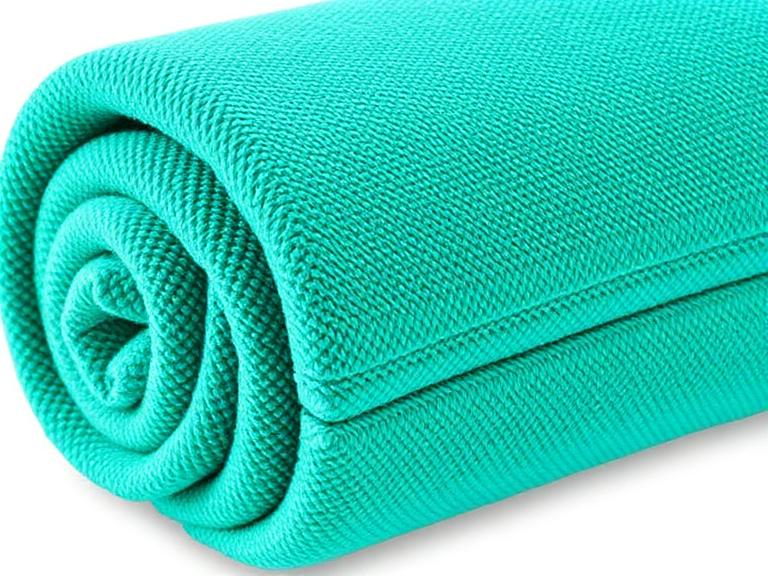
1. The Dense Microfiber Quick Dry Set (Top Pick)
For commercial users like high-end salons, and for individuals demanding peak performance at home, dense flat-weave microfiber is the undisputed gold standard. It offers the highest water retention capacity per square inch without adding heavy physical weight to the neck.

Quick Dry Towel Premium With Hanging Loop
- Material: Premium Dense Microfiber (300g weight)
- Properties: Super Absorbent, Skin Friendly, Antibacterial Fresh
- Design: Superior Edge Security with Functional Elastic Strap
This set completely redefines moisture extraction. Engineered from ultra-soft, dense microfiber, it pulls water from fine hair instantly without roughing the cuticle. The lightweight design means zero neck strain, and the functional elastic strap ensures a secure wrap that will not slip. It is, unequivocally, the fastest drying hair towel for fine hair available.
View Premium Quick Dry Set2. The Waffle-Weave Microfiber Wrap

Waffle-weave towels feature a grid-like texture that vastly increases the surface area of the fabric, allowing for rapid evaporation. While it dries incredibly fast, the textured surface provides slightly more friction than a flat weave. We recommend this for fine hair that has a lot of volume, as the waffle texture holds more total water mass.
3. The Tencel Lyocell Fast-Dry Wrap
Tencel is a highly sustainable fabric derived from wood pulp. When you analyze a tencel vs modal comparison, Tencel stands out for its exceptional moisture management and structural integrity when wet. It is extraordinarily smooth, making it perfect for fine hair that is prone to severe tangling.
4. The Silk-Lined Microfiber Towel

This is a premium hybrid innovation. The interior that directly touches your hair is smooth mulberry silk, while the exterior is highly absorbent microfiber. Much like how our silk bedding collection protects your skin overnight, the silk interior here guarantees absolutely zero friction, while the microfiber exterior pulls moisture through the breathable silk barrier.
5. The Bamboo Viscose Turban
Bamboo is naturally hypoallergenic and highly absorbent. A bamboo wrap is incredibly soft and drapes beautifully without pulling on the hair roots. If you suffer from scalp acne or irritation, pair a bamboo hair towel with the best pillowcases for acne to maintain a completely antibacterial environment for your head and face.
6. The Modal Blend Hair Towel
Modal, another beech-tree-derived cellulosic fiber, is known for being up to 50% more absorbent than standard cotton. It remains incredibly soft even after hundreds of washes. For heavy-duty applications in humid climates where standard towels struggle to dry on the rack, a modal-microfiber blend prevents mildew buildup.
7. The Jersey Cotton (T-Shirt) Towel
For beginners on a strict budget, wrapping your hair in a soft cotton T-shirt has been a DIY hack for decades. Commercial jersey cotton towels mimic this exact feel. They lack the aggressive loops of terry cloth, meaning they will not cause frizz. However, their water absorption speed is significantly lower than advanced synthetics.
8. The Ultra-Thin Suede Microfiber
This fabric feels almost like chamois leather and is commonly used by competitive swimmers. It is the absolute thinnest profile available. While it does not hold as much water as plush microfiber, for those with very thin, fine hair, it is more than sufficient and dries the hair in mere minutes.
Core Benefits and Limitations
Upgrading to the fastest drying hair towel for fine hair yields immediate, measurable dividends. First, you drastically reduce your blow-drying time. Less heat exposure translates directly to fewer split ends and less thermal damage. Second, by eliminating the sheer weight of heavy bath towels, you prevent traction stress at the follicle, which is a leading cause of thinning in fine hair types. Similar to how upgrading from a basic throw to checking our luxury blanket brands guide transforms your comfort, upgrading your hair towel transforms your daily grooming efficiency.
However, there are limitations. Microfiber has a specific thermal vulnerability. You cannot wash high-grade synthetic microfibers in hot water or dry them on high heat, as the microscopic plastic fibers will melt, completely destroying their capillary action. Furthermore, using liquid fabric softeners coats the textile channels in wax, rendering the towel completely non-absorbent.
Who Should Use It & Who Does Not Need It
For commercial users and professionals: Salon owners must discard terry cloth immediately. Using an advanced microfiber wrap on a client's fine hair demonstrates premium care, reduces time in the styling chair, and improves the final blowout result by eliminating baseline frizz.
For beginners at home: Anyone suffering from flat, frizzy, or easily broken hair must make this their first upgrade before wasting money on expensive bonding serums.
Who does not need it: If you have incredibly thick, coarse, low-porosity hair, a lightweight fine-hair towel might saturate too quickly. You may still require a larger, heavier towel to handle the massive volume of water, similar to how one might choose a heavy bedspread over a light duvet (as explored in our duvet cover vs bedspread guide).
Common Hair Drying Mistakes
In most professional situations, the most destructive mistake we observe is the "rub and scrub" technique. Even if you own the fastest drying hair towel for fine hair, if you aggressively rub the fabric against your scalp, you will cause mechanical damage. You must use the "blot and squeeze" method.
Additionally, leaving the towel on for too long (over 20 minutes) can cause "hygral fatigue," where the hair swells and contracts improperly, leading to deep structural weakness.
Comparison Table: Material vs. Performance
| Performance Metric | Standard Cotton Terry | Premium Microfiber (Top Pick) | Bamboo / Tencel |
|---|---|---|---|
| Water Absorption Speed | Slow | Lightning Fast | Moderate |
| Weight on Follicles | Heavy (Causes root breakage) | Ultra-Lightweight | Light to Medium |
| Friction / Frizz Creation | High | Almost Zero | Very Low |
| Maintenance Requirements | Low (Wash hot, dry hot) | High (Cold wash, air dry) | Medium (Gentle cycle) |
Pros and Cons: Traditional vs. Fast-Drying Towels
| Pros of Fast-Drying Towels | Cons of Fast-Drying Towels |
|---|---|
| Cuts blow-drying time by up to 50%, saving hair from severe heat damage. | Requires specific laundering rules (no fabric softeners or high heat). |
| Eliminates root pulling and traction alopecia caused by heavy, wet towels. | High-quality microfiber represents a higher initial investment than cheap cotton. |
| Smooth surface prevents cuticle lifting, naturally eliminating frizz. | Some synthetic microfibers can generate static electricity in very dry climates. |
| Highly portable; excellent for gym bags, camping, and travel. | Cheap, unbranded versions can feel "grabby" on dry skin on the hands. |
Commercial Buying Considerations
When purchasing, do not just look at the material label; look at the dimensions and closures. A towel that is too small will not securely wrap around the head, while one that is too large mimics the problem of heavy bath towels. Always check sizing charts, just as you would consult a blanket sizes chart guide for your bed, or verify a king vs queen fitted sheet size before buying bedding. Furthermore, look for secure fastening systems—a functional elastic strap or a sturdy button loop is vastly superior to a simple fabric tuck, which will constantly unspool and fall down while you get ready.
Souverhome Expert Recommendation
The Souverhome Textile Verdict
If you are serious about mitigating breakage in fine hair, you must discard your terry cloth towels immediately. The science of capillary action dictates that dense microfiber is superior for rapid water extraction. We strongly recommend our own Quick Dry Towel Premium Set. In our testing, its specific weave density extracts moisture rapidly without requiring any damaging friction, while the functional elastic loop design ensures it stays anchored securely on the head without pulling at the hairline. Just as we recommend checking out the best duvet covers review or browsing a premium blanket collection shop to optimize your sleep environment, optimizing your wet-hair routine with this specific towel is a non-negotiable upgrade for your daily grooming regimen.
The Bottom Line
Your hair is at its absolute weakest when saturated with water. Subjecting fine hair to the weight and abrasion of standard bath towels guarantees frizz, breakage, and thinning over time. By investing in the fastest drying hair towel for fine hair—specifically a flat-weave, dense microfiber model—you leverage capillary physics to dry your hair rapidly and safely. It is a minor financial investment that yields massive, long-term structural benefits for your hair's health, density, and appearance.
Frequently Asked Questions
Is microfiber actually better than cotton for fine hair?
Yes. Microfiber is vastly superior because its synthetic fibers are split, creating millions of microscopic channels that draw water in through capillary action. Cotton relies on thicker loops that require rubbing and friction to absorb water, which tears at the delicate cuticle of fine hair.
How do I wash my microfiber hair towel to keep it absorbent?
You must wash microfiber in cold or warm water with a mild, residue-free detergent. Never use liquid fabric softeners or dryer sheets, as the oils and waxes will permanently clog the microscopic channels, rendering the towel useless. Air dry or tumble dry on the lowest possible heat setting.
How long should I leave a fast-drying towel on my head?
For fine hair, you should leave a fast-drying microfiber towel on for no longer than 10 to 15 minutes. This is sufficient time to remove the excess dripping water. Leaving wet hair wrapped up tightly for hours can cause fungal issues on the scalp and lead to hygral fatigue in the hair shaft.
Authoritative Industry References
- American Academy of Dermatology (AAD) - Healthy Hair Care Habits and Breakage Prevention
- Textile Research Journal - Physics of Capillary Action and Water Absorption in Synthetic Microfibers
- International Association of Trichologists (IAT) - Understanding Hair Weathering, Cuticle Damage, and Traction Alopecia


Leave a comment
This site is protected by hCaptcha and the hCaptcha Privacy Policy and Terms of Service apply.