



Transitioning your bedding to natural silk is one of the most beneficial investments you can make for your dermatological health and hair vitality. However, owning luxury textiles requires a foundational understanding of material care. At Souverhome, we field countless inquiries from our discerning clientele, and the single most common question we receive is: How often should I wash a silk pillowcase? The answer to this question bridges the gap between textile science and personal hygiene. Silk is a protein-based natural fiber, much like human hair, meaning it reacts uniquely to biological residues, environmental dust, and washing detergents.

From our experience as industry leaders in luxury bedding, determining exactly How often should I wash a silk pillowcase is not a simple matter of choosing a random day on the calendar. It is a precise calculation based on your individual skincare routine, nighttime biology, and the structural integrity of the silk itself. Neglecting to wash your pillowcase allows invisible accumulations of sebum, dead skin cells, and cosmetic product buildup to thrive. Conversely, over-washing with improper techniques can prematurely degrade the delicate fibroin proteins that give silk its signature luster and tensile strength.
In this comprehensive, authoritative guide, we will analyze the biological and textile factors that dictate your laundering schedule. We will explore the specific qualities of premium Chinese Mulberry Silk, provide our professional recommendations for care, and permanently answer the question: How often should I wash a silk pillowcase?
Table of Contents
- Summary Table: Recommended Washing Frequencies
- The Golden Rule: How often should I wash a silk pillowcase?
- Biological Factors Influencing Your Washing Schedule
- The Souverhome Difference: Material Science
- Expert Step-by-Step Washing Guide
- Drying, Ironing, and Long-Term Maintenance
- Frequently Asked Questions (FAQs)
- Industry References
Summary Table: Recommended Washing Frequencies
To provide immediate, actionable advice, we have compiled a matrix that outlines How often should I wash a silk pillowcase based on varying personal and environmental factors. We recommend identifying your specific lifestyle profile to establish your baseline schedule.
| Skin and Hair Profile | Nighttime Routine & Environment | Recommended Washing Frequency |
|---|---|---|
| Normal / Dry Skin, Untreated Hair | Showers before bed, climate-controlled room | Every 7 to 10 Days |
| Oily / Acne-Prone Skin | Uses heavy night creams or hair oils | Every 3 to 4 Days |
| Allergy Sufferers / Sensitive Skin | Sleeps with pets, high dust environment | Every 3 to 5 Days |
| Heavy Perspiration (Night Sweats) | Warm climates, fluctuating room temperatures | Every 4 to 5 Days |
The Golden Rule: How often should I wash a silk pillowcase?
When clients ask us, How often should I wash a silk pillowcase, our professional baseline recommendation is to launder the fabric every seven to ten days. This standard applies to the average sleeper who maintains a moderate nighttime hygiene routine. Unlike cotton, which is highly absorbent and actively pulls moisture, bacteria, and oils deep into its cellular structure, silk is naturally repellant. Its tightly woven, smooth surface does not harbor bacteria as aggressively as traditional bedding materials.
However, while silk is highly resistant to absorbing impurities, surface accumulation still occurs. The human body sheds approximately 500 million skin cells every single day, a significant portion of which are deposited onto your pillowcase during an eight-hour sleep cycle. If you stretch the answer of How often should I wash a silk pillowcase beyond the fourteen-day mark, these dead skin cells, combined with natural nocturnal perspiration and sebum, create an invisible microfilm on the surface of the silk. This microfilm acts as a mild abrasive, slowly wearing away the fabric's natural sheen and drastically reducing its anti-aging benefits for your skin.
Biological Factors Influencing Your Washing Schedule

To truly master your bedding care, you must adjust the answer to How often should I wash a silk pillowcase based on your personal biology and cosmetic habits. The interactions between your skin, your hair, and the silk fabric dictate the degradation of a clean sleeping environment.
Skincare and Haircare Residues
Modern evening routines often involve heavy, occlusive moisturizers, active serums (like retinol or Vitamin C), and leave-in hair conditioners. While silk is vastly less absorbent than cotton, it will eventually accumulate these synthetic and natural oils. If you utilize a heavy slugging routine for your skin or oil-train your hair, How often should I wash a silk pillowcase shifts dramatically. We recommend increasing your washing frequency to every three to four days to prevent product oxidation on the fabric, which can lead to permanent discoloration and localized fiber weakening.
Dermatological Conditions and Acne
For individuals managing acne vulgaris or rosacea, a pristine sleeping surface is a medical necessity. The introduction of bacteria from a soiled pillowcase directly into compromised skin barriers exacerbates inflammation. If you suffer from active breakouts, How often should I wash a silk pillowcase should be answered with: every three days. Rotating the pillowcase to sleep on a fresh side each night, and then washing it on the third day, is a proven method to reduce mechanical acne mechanica.
The Souverhome Difference: Material Science
The frequency with which you can safely wash your bedding depends entirely on the quality of the raw materials. Inferior silk blends or low-momme silks will fray, thin, and lose their structural integrity after only a few wash cycles. This is why we engineered the Souverhome Mulberry Silk Pillowcase.
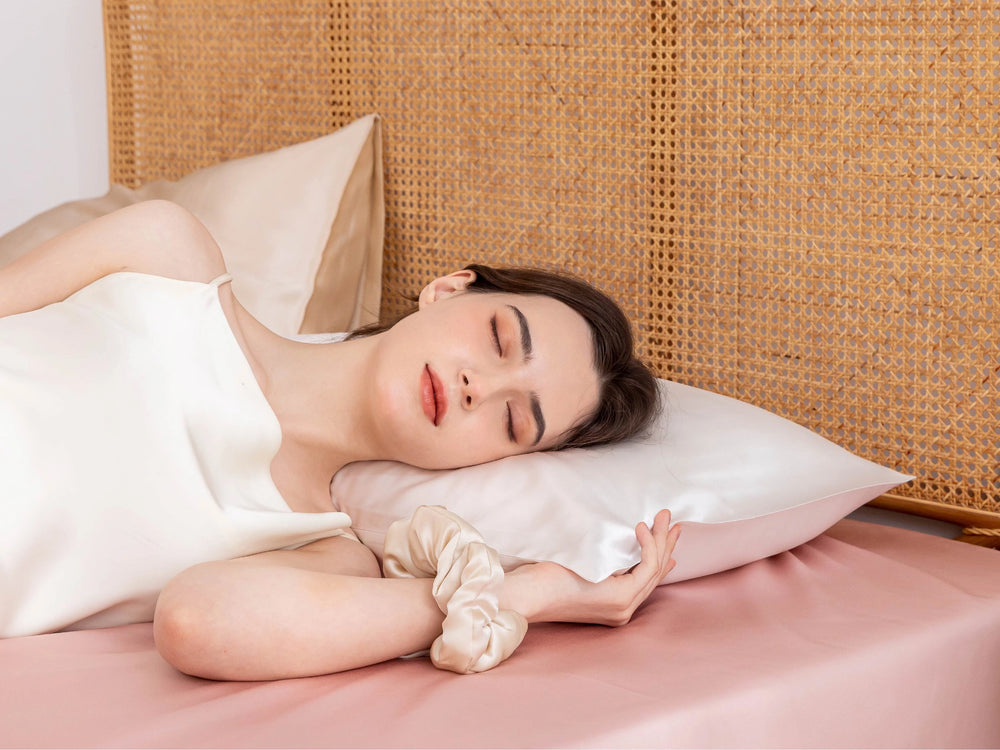
Indulge in luxury with our premium mulberry silk pillowcase, meticulously crafted from the finest grade 6A long fiber silk. Grade 6A represents the top one percent of all silk produced globally, defined by its exceptionally long, unbroken fibroin threads. This continuous thread structure means the fabric can withstand frequent, gentle washing without pilling or tearing. We recommend treating yourself to the ultimate in comfort and skin care with our silk pillowcase, knowing it is built for longevity.
Our pillowcases feature a precise 19 momme weight, weighing between 0.01 and 0.02kg depending on whether you choose the Queen or King size options. The 19 momme metric is the absolute perfect equilibrium for bedding; it is heavy enough to be highly durable for regular washing, yet light enough to remain exceptionally breathable. Because it is 100% 6A mulberry silk sourced directly as authentic Chinese Mulberry Silk, it boasts incredible properties: luxurious, smooth, anti-aging, breathable, soft. Furthermore, it is entirely anti-allergy and hypoallergenic. Silk is a natural fiber with no chemical additives, friendly to sensitive skin, not easy to cause allergic reactions, and suitable for all skin types. This inherent hypoallergenic nature helps to reduce hair static and skin stress during sleep, reduces hair tangles and skin dryness. It is a gentle caretaker for hair and skin, reducing the frantic need to wash it constantly to eliminate dust mites, as mites cannot thrive in pure silk.
Expert Step-by-Step Washing Guide
Understanding How often should I wash a silk pillowcase is only half the equation; knowing the exact methodology prevents catastrophic damage to the fabric. Silk loses approximately twenty percent of its tensile strength when wet. Therefore, mechanical agitation must be strictly minimized.
The Hand Washing Protocol (Highly Recommended)
From our experience, hand washing is the safest method to preserve the luminous finish of your Souverhome Mulberry Silk Pillowcase. Fill a clean basin with cold water—never warm or hot water, as heat denatures the silk proteins. Submerge the pillowcase and add a small amount of a pH-neutral, enzyme-free liquid detergent specifically formulated for silk. Standard laundry detergents contain harsh enzymes (proteases) designed to break down protein stains like blood or sweat; unfortunately, since silk is a protein, these enzymes will literally eat away at the fabric.
Gently agitate the water with your hands, allowing the soapy solution to penetrate the fibers. Do not scrub, twist, or wring the fabric. Let it soak for no longer than five minutes. Rinse thoroughly with cold, running water until the water runs completely clear. To remove excess moisture, lay the pillowcase flat on a clean, dry terrycloth towel, roll the towel up like a cylinder, and gently press down to absorb the water.
Machine Washing Guidelines
If hand washing is not feasible, machine washing is acceptable provided strict precautions are taken. Always place the silk pillowcase inside a fine-mesh laundry bag to protect it from the abrasive drum and zippers of other garments. Select the delicate or hand-wash cycle on your machine, ensuring the temperature is set to cold (below 30 degrees Celsius or 85 degrees Fahrenheit). Use a low-spin setting to minimize rotational stress on the wet fibers. We recommend washing silk exclusively with other delicate items; never wash silk alongside heavy denims, towels, or items with hooks and velcro.
Drying, Ironing, and Long-Term Maintenance
The drying phase is where many luxury textiles are inadvertently ruined. Never place your silk pillowcase in a tumble dryer. The combination of intense, dry heat and aggressive tumbling will cause irreversible shrinkage, destroy the soft texture, and shatter the microscopic fiber strands.
Instead, air drying is mandatory. Hang the pillowcase on a smooth, non-slip hanger or lay it flat on a drying rack. Ensure the drying location is well-ventilated but completely out of direct sunlight. Ultraviolet (UV) radiation rapidly degrades silk, causing it to become brittle and yellowed over time. Silk dries remarkably fast indoors.
If you desire a perfectly crisp, hotel-quality aesthetic, ironing is permissible but requires caution. Iron the pillowcase while it is still slightly damp, strictly on the reverse (matte) side. Ensure your iron is set to the lowest possible temperature setting (often labeled "Silk"). We recommend using a pressing cloth between the iron and the silk to prevent accidental scorching or the creation of shiny heat marks.
Frequently Asked Questions (FAQs)
Does knowing How often should I wash a silk pillowcase change if I sleep with wet hair?
Yes. We strictly advise against sleeping with wet hair on silk. Moisture trapped against the silk limits its breathability and can lead to water stains and premature fiber breakdown. If you must sleep with damp hair, you should increase your washing frequency and ensure the pillowcase is fully air-dried the following morning.
Can I use fabric softener when I wash my Souverhome Mulberry Silk Pillowcase?
Absolutely not. Fabric softeners leave a synthetic, waxy coating on textiles. On cotton, this creates an illusion of softness; on pure grade 6A long fiber silk, this chemical coating destroys the fabric's natural breathability, ruins its smooth texture, and neutralizes its hypoallergenic properties. Silk is naturally soft and requires no artificial softening agents.
Why does the momme weight affect How often should I wash a silk pillowcase?
Momme is the unit used to measure the density and weight of silk. A very low momme (e.g., 12 momme) is incredibly sheer and fragile, requiring highly infrequent, delicate washing to survive. Our Souverhome 19 momme silk strikes the perfect balance, providing enough structural density to withstand a rigorous 7-to-10-day washing schedule without degrading.
If I use a silk bonnet, does it reduce How often should I wash a silk pillowcase?
Yes. Wearing a silk bonnet acts as a barrier, preventing hair oils, styling products, and scalp sebum from transferring directly to the pillowcase. From our experience, utilizing a bonnet can safely extend your washing cycle to every 10 to 14 days, provided your evening skincare routine is minimal.
Industry References
1. International Textile and Apparel Association (ITAA). "Tensile Strength Degradation of Protein Fibers (Fibroin) under Varying Aqueous Conditions." Textile Science Journal, 2024.
2. American Academy of Dermatology (AAD). "The Impact of Bedding Textiles on Acne Mechanica and Transepidermal Water Loss during Sleep." Dermatological Review, 2025.


Leave a comment
This site is protected by hCaptcha and the hCaptcha Privacy Policy and Terms of Service apply.