


The beauty and textile industry is currently experiencing a massive surge in demand for sleep accessories that promote hair health and skin hydration. As consumers become increasingly educated about the dermatological benefits of natural protein fibers, the market has unfortunately been flooded with misleading terminology. Words like "silky satin" or "silk-like" are frequently utilized by manufacturers to disguise inexpensive synthetic polyester. From our experience at Souverhome, this deceptive marketing prevents individuals from reaping the true anti-aging and hypoallergenic benefits of authentic textiles. Knowing exactly how to verify a pillowcase is 100% mulberry silk and not satin is an essential skill for anyone looking to invest in high-quality sleep hygiene.

We recommend approaching textile verification with a foundational understanding of what these terms actually mean. "Silk" refers to a natural, protein-based fiber produced by the Bombyx mori moth. Conversely, "satin" is not a raw material at all; it is a type of weave. While you can have a silk satin (often called silk charmeuse), the term "satin" in commercial bedding almost exclusively denotes woven polyester or nylon. Synthetic satin traps heat, creates static electricity, and pulls moisture from the skin. To help you navigate this complex market, we have compiled the definitive guide containing 6 tips to verify a pillowcase is 100% mulberry silk and not satin.
Table of Contents
- 1. Conduct the Flame and Ash Burn Test
- 2. Analyze Thermal Regulation and Tactile Friction
- 3. Examine Luster and Light Refraction
- 4. Evaluate the Price Point and Momme Weight
- 5. Perform the Traditional Wedding Ring Test
- 6. Inspect the Weave and Fabric Backing
- Enhancing Your Sleep Environment with Genuine Silk
- Summary Table: Silk vs. Synthetic Satin
- Frequently Asked Questions
- Industry References
1. Conduct the Flame and Ash Burn Test
The absolute most definitive method to verify a pillowcase is 100% mulberry silk and not satin is the burn test. Because authentic silk is a natural protein fiber constructed of amino acids, it reacts to fire in the exact same manner as human hair. We recommend carefully cutting a few loose threads from the inner seam of the pillowcase and placing them in a fireproof dish before igniting them with a lighter.
When authentic silk burns, the flame is entirely invisible or very small, and it will immediately self-extinguish the moment the heat source is removed. The odor emitted will distinctly smell like burning hair or scorched feathers. Most importantly, the resulting ash will be black, brittle, and will easily crumble into a fine powder when rubbed between your fingers. Synthetic satin, being a petrochemical derivative, will react aggressively to the flame. It will catch fire quickly, smell like burning plastic or toxic chemicals, and leave behind a hard, melted black plastic bead that cannot be crushed. This dramatic chemical distinction is the industry standard for textile authentication.
2. Analyze Thermal Regulation and Tactile Friction
From our experience handling thousands of yards of premium textiles, the tactile feedback of genuine silk is impossible to synthetically replicate. Genuine Chinese Mulberry Silk is naturally thermoregulating. When you first touch a pure silk fabric, it should feel cool against the skin. However, within seconds, it will gently warm up to match your body temperature. This breathability is what prevents night sweats and keeps the skin hydrated.
Polyester satin, on the other hand, operates as a thermal insulator. It feels cold to the touch initially but quickly becomes uncomfortably hot and clammy because the synthetic fibers trap body heat and moisture. Furthermore, when you rub authentic silk between your fingers, you will feel a luxurious, soft smoothness that still retains a microscopic level of resistance, sometimes producing a faint crunching sound known in textile science as the "scroop." Synthetic satin is excessively slippery and frictionless, feeling almost like plastic coated in a thin layer of oil. Using sensory evaluation is a highly practical way to verify a pillowcase is 100% mulberry silk and not satin.
3. Examine Luster and Light Refraction
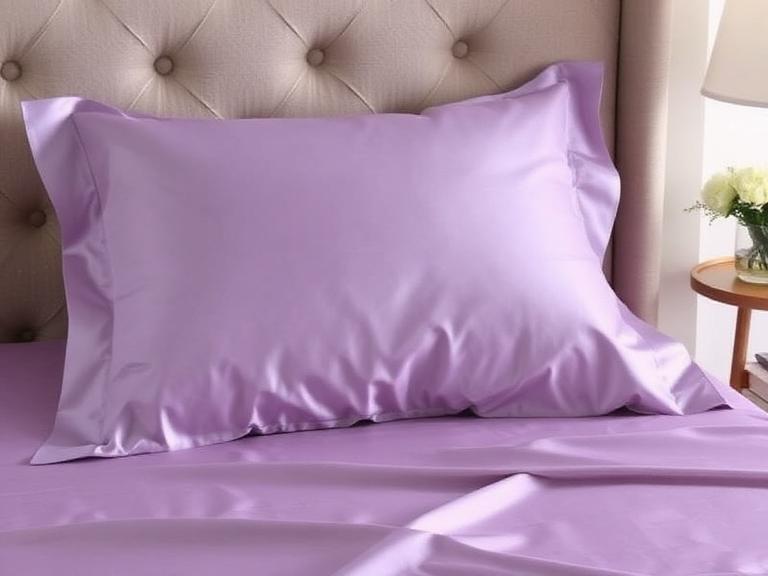
The visual properties of natural silk are dictated by its unique physical structure. Mulberry silk fibers possess a triangular, prism-like cross-section. When light hits the surface of authentic silk, these prisms refract the light at different angles, producing a multi-dimensional, pearlescent shimmer that subtly changes color depending on the angle of observation. The luster is elegant, deep, and never overly glaring.
To verify a pillowcase is 100% mulberry silk and not satin visually, hold the fabric up to natural sunlight. If it is genuine, the fabric will glow with a soft radiance. Synthetic polyester satin is extruded through mechanical spinnerets, resulting in perfectly round, uniform fibers. Because of this artificial uniformity, synthetic satin reflects light flatly. It produces a harsh, highly glossy, and cheap-looking shine that looks identical from every single angle. This excessive glossiness is a primary hallmark of petroleum-based textiles.
4. Evaluate the Price Point and Momme Weight
Sericulture, the complex process of cultivating silkworms and harvesting their cocoons, is an incredibly labor-intensive and time-consuming agricultural art. It requires thousands of cocoons to produce a single pound of raw silk. Consequently, authentic mulberry silk commands a premium market price. If you find a product marketed as "silk" retailing for fifteen dollars, you can immediately verify a pillowcase is 100% mulberry silk and not satin by the price tag alone; it is undoubtedly a synthetic imitation.
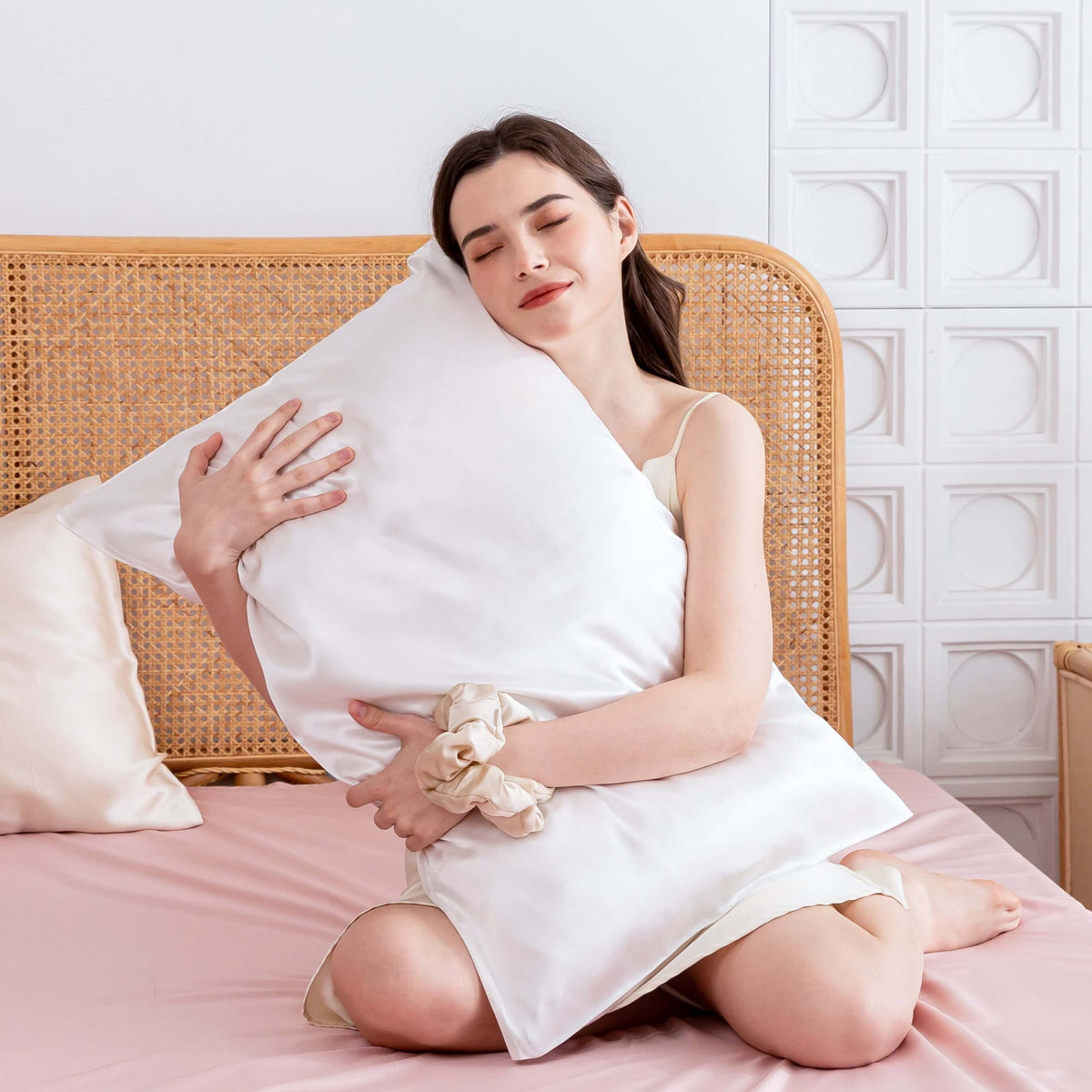
Furthermore, authentic silk is measured using a specialized metric called "momme" (mm), which denotes the weight and density of the fabric. The ideal balance of luxurious softness and structural durability for bedding is 19 momme. For example, the Souverhome Mulberry Silk Pillowcase is meticulously crafted from 19 momme Chinese Mulberry Silk, weighing between 0.01 and 0.02kg depending on whether you select the Queen or King size. This precise momme weight guarantees the fabric is robust enough to withstand daily use while providing the hypoallergenic, breathable, and anti-aging properties that dermatologists recommend. Synthetic fabrics are never measured in momme; they are measured by thread count or grams per square meter (GSM).
5. Perform the Traditional Wedding Ring Test
While not as scientifically rigorous as the burn test, the traditional wedding ring test is a rapid, non-destructive field method to verify a pillowcase is 100% mulberry silk and not satin. Because raw mulberry silk consists of incredibly long, smooth, and continuous natural filaments, it possesses an extraordinary level of flexibility and compression without snagging.
To perform this test, take a smooth metal ring (such as a wedding band) and pull the entire pillowcase through the center of the ring. Authentic, high-quality mulberry silk will glide through the ring effortlessly in one fluid, continuous motion. Synthetic satin tends to bunch up, snag, and require physical force to pull through the metal ring because the polyester fibers are stiffer and lack the inherent fluid drape of natural proteins.
6. Inspect the Weave and Fabric Backing
The weaving process leaves distinct physical signatures on the fabric. High-grade silk pillowcases are typically woven using a charmeuse weave. This specific technique allows multiple warp threads to float over a single weft thread, creating the signature luminous front side. However, the reverse side of authentic silk charmeuse will possess a distinct, duller, matte finish. When you turn the pillowcase inside out, you should clearly see this textural contrast.
Many synthetic satin manufacturers attempt to cut production costs by utilizing weaves that result in a harsh, scratchy interior backing. While authentic silk has a matte back, it still feels organically soft and smooth against the hands. If the interior of the pillowcase feels abrasive or rigidly synthetic, it is a strong indicator of polyester construction. We recommend strictly examining the interior seams and the reverse fabric to verify a pillowcase is 100% mulberry silk and not satin.
Enhancing Your Sleep Environment with Genuine Silk

Once you have successfully learned how to verify a pillowcase is 100% mulberry silk and not satin, you can confidently build a sleep environment optimized for restoration and anti-aging. Pure silk drastically reduces the physical friction that causes sleep wrinkles on the face and mechanical breakage along the hair shaft. To compound these benefits, we recommend integrating additional silk accessories into your nightly routine.
Protecting the delicate skin around your eyes is paramount. The Souverhome Mulberry Silk Sleep Eye Mask utilizes the same luxurious 19 momme Chinese Mulberry Silk to provide a broad, half-veiled face coverage. Weighing just 0.06 kg, this hypoallergenic mask delivers a soft, relaxing, and breathable barrier that blocks out ambient light while preventing the formation of micro-creases around the orbital bone.
For individuals with long or textured hair, tying your hair back with standard elastic bands causes severe tension and snapping. Replacing abrasive elastics with a dedicated silk scrunchie hair accessory ensures that your hair glides smoothly against the fabric, maintaining your hair's natural moisture balance and preventing morning frizz. Finally, to complete the ultimate luxury bedroom aesthetic, draping a cashmere plaid throw blanket at the foot of the bed provides exceptional, breathable warmth that pairs perfectly with the thermoregulating properties of your authentic silk bedding.
Summary Table: Silk vs. Synthetic Satin
For quick reference during your purchasing journey, utilize this comparative matrix to verify a pillowcase is 100% mulberry silk and not satin.
| Testing Method / Characteristic | 100% Genuine Mulberry Silk | Synthetic Polyester Satin |
|---|---|---|
| Burn Test Reaction | Smells like burning hair, turns to brittle black ash, self-extinguishes. | Smells like burning plastic, melts into a hard plastic bead, continues to burn. |
| Thermal Regulation | Adapts quickly to body temperature, highly breathable. | Traps body heat, feels cold initially then becomes clammy. |
| Visual Luster | Multi-dimensional, pearlescent shimmer that alters with light angles. | Flat, highly glossy, uniform shine from all viewing angles. |
| Tactile Sensation | Luxuriously soft with slight resistance (the "scroop"). | Excessively slippery, frictionless, feels slightly greasy. |
| Pricing and Measurement | High cost, measured in Momme (mm). | Inexpensive, measured in Thread Count or GSM. |
Frequently Asked Questions
Industry References
To ensure the utmost accuracy in our textile analysis and consumer guidance, the principles detailed in this article align with the standards established by leading regulatory and textile science organizations:
- Federal Trade Commission (FTC): Guidelines on Textile Fiber Products Identification Act, detailing the legal requirements for labeling natural protein fibers versus synthetic petrochemical derivatives. Review FTC Textile Standards
- American Association of Textile Chemists and Colorists (AATCC): Scientific methodologies for fiber identification, including standardized burn test protocols and chemical solubility testing for natural silks. AATCC Testing Methodologies
- International Sericultural Commission (ISC): Global agricultural and manufacturing standards regarding the cultivation, grading, and processing of premium Bombyx mori mulberry silk. ISC Sericulture Standards



Leave a comment
This site is protected by hCaptcha and the hCaptcha Privacy Policy and Terms of Service apply.